



AI is changing how B2B buyers discover companies, and LinkedIn is emerging as one of the most powerful sources shaping those answers. For marketers, the challenge is no longer simply to rank. It is to become credible enough to be cited.
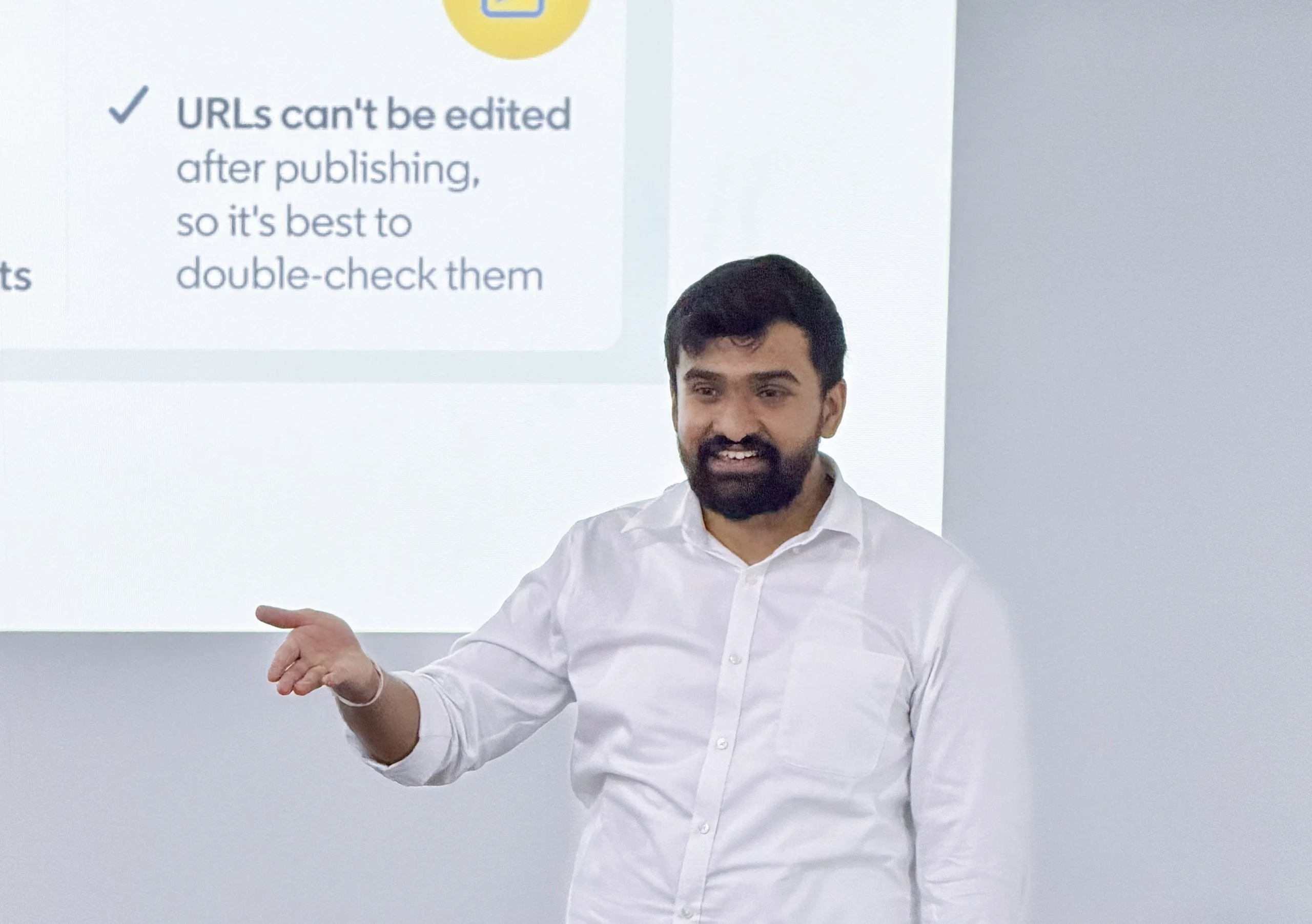
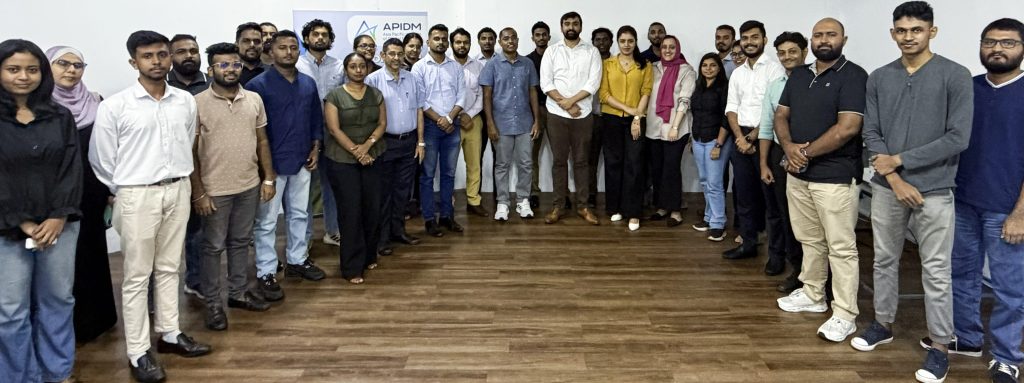
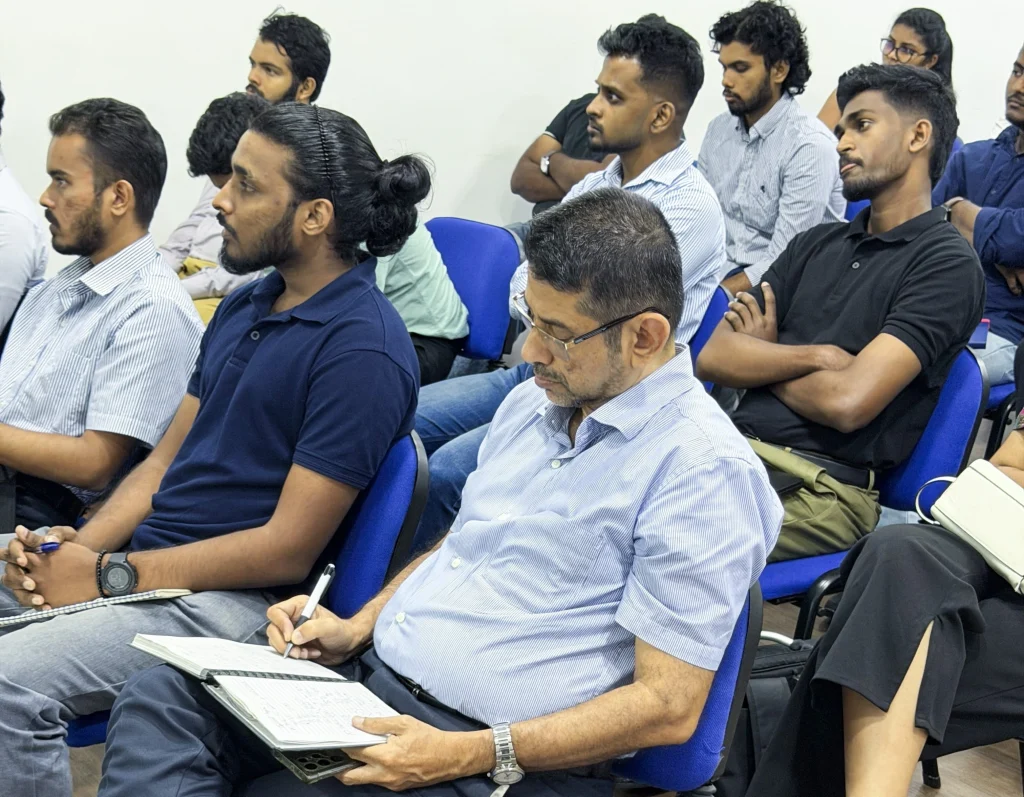
Techie.LK recently partnered with the Asia Pacific Institute of Digital Marketing (APIDM) and attended its latest SyncUp Colombo gathering where Nelaka Jayasekera, Marketing Lead at Aventude, spoke on the LinkedIn Shift, addressing how marketing has changed across the world’s largest professional networking platform.
The next time a potential customer asks an Artificial Intelligence (AI) tool to recommend a brand, be it a software company, consultant or technology provider, there is no guarantee they will see, or even visit, the company’s website.
The answer may already have been assembled for them.
That is the fundamental shift taking place in Business-to-Business (B2B) marketing. Buyers are increasingly turning to tools such as ChatGPT, Gemini, Copilot and Perplexity to research companies, compare solutions and make shortlists before they ever reach a conventional search result.
According to “Unlocking AI Visibility: The B2B Marketer’s Guide to LinkedIn,” LinkedIn’s 2026 report on AI search visibility, 94% of B2B in-market buyers use generative AI for research, while Gartner predicts that traditional search volume could fall by 50% by 2028.
Therefore, for marketers, the question is changing.
It is no longer simply: How do we rank?
It is: How do we become an answer?
As Nelaka Jayasekera, Marketing Lead at Aventude, pointed out; “Being searchable is no longer enough. Brands need to be citable.”
From search rankings to AI recommendations
The implications are particularly significant for technology companies.
Traditional search rewarded websites that were optimized around keywords, links and rankings. AI search works differently; it gathers information from multiple sources and synthesizes it into an answer.
That means a company’s visibility increasingly depends on the quality and consistency of the information available about it, and the people associated with it.
LinkedIn’s report identified the platform as the most-cited domain for professional queries in AI search.
It also pointed to a striking distinction in where those citations originate: Around 75% of LinkedIn citations come from individual member profiles, compared with 25% from Company Pages.
That finding challenges one of the assumptions behind corporate social media.
A company page alone may not be enough.
The ‘intern effect’
Nelaka highlighted just how disruptive this change can be during his recent discussion on LinkedIn and AI search, at the last SyncUp Colombo gathering hosted by the Asia Pacific Institute of Digital Marketing (APIDM).
In one example, he described an AI search that was expected to surface authoritative material from senior professionals.
Instead, the result included an intern who had been actively posting on LinkedIn.
“It was actually an intern… and he had actually been cited.”
The significance is not that seniority suddenly has no value.
It is that seniority is no longer the only signal of authority.
An individual who consistently publishes useful, relevant material can create a digital record of expertise that AI systems can discover and use.
For companies, that creates a much bigger opportunity, and a bigger responsibility.
The engineers, developers, consultants, researchers, salespeople and executives inside an organization are potentially part of its search visibility strategy.
“Authority can be built through evidence of expertise, not simply through hierarchy.”
The company page is only the beginning
LinkedIn describes this as a broader “credibility stack.”
The brand establishes its point of view.
Executives provide leadership, employees demonstrate expertise, creators extend reach, and customers and peers provide validation.
LinkedIn says it has seen a six-fold engagement lift when employees become active creators.
Nelaka’s advice is similarly focused on activating people rather than relying entirely on the corporate account.
“Activate all the critical voices on that field,” he stated.
For a technology company, that could mean having a senior engineer discuss emerging technologies, a sales executive explains customer challenges, a university-facing employee talk about skills and talent, and a technology leader offer a perspective on industry developments.
The result is not simply more LinkedIn content.
It is a wider body of evidence showing what the organization actually knows.
Give AI something worth citing
That also changes what companies should publish.
Generic promotional posts may keep a feed active, but they provide limited evidence of expertise. Content that answers real questions is much more valuable.
Nelaka argued that companies should not be afraid to make useful information freely available.
“You can leave it out there freely with the pure intention of being discovered,” he said.
That is a significant shift from the traditional B2B marketing model, where valuable reports, guides and research are frequently placed behind forms designed to capture leads.
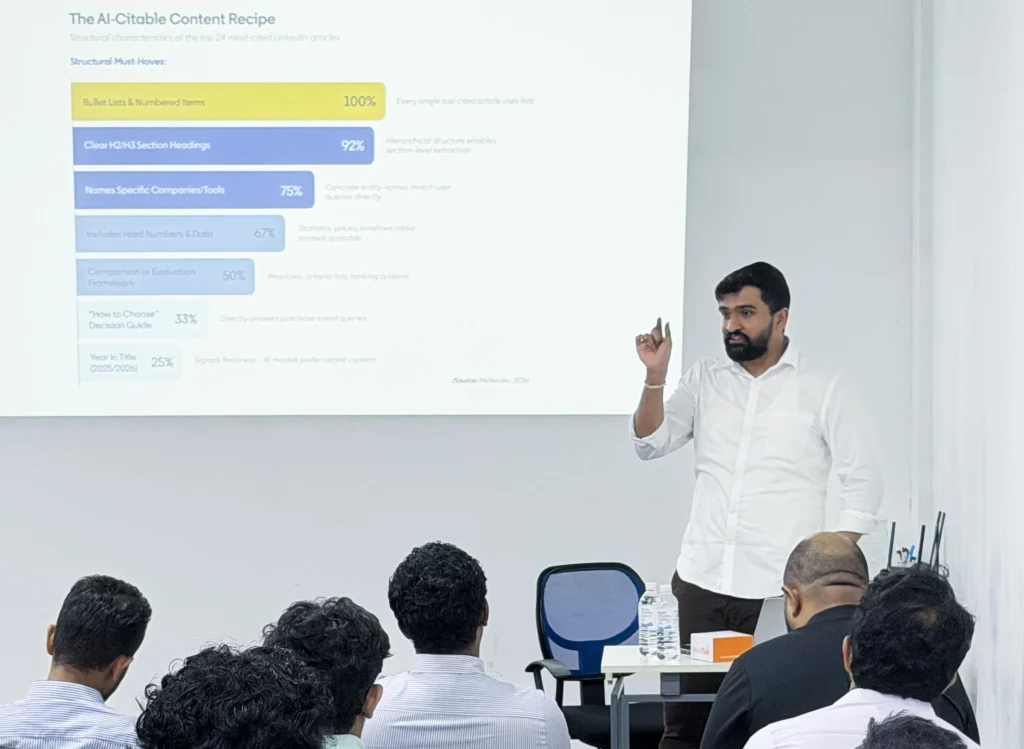
Original research, statistics, comparisons, evaluation frameworks, checklists, Frequently Asked Questions (FAQs) and practical guides can all provide stronger signals of expertise.
The objective is not simply to persuade someone to buy.
It is to answer the question they are asking before they are ready to buy.
Content needs to speak to humans, and also machines
This is where the emerging discipline of Answer Engine Optimization, or AEO, enters the picture.
Content needs to be structured so that both people and AI systems can understand it.
Clear headings, direct answers, question-based subheadings and specific terminology make it easier for information to be identified and connected with a particular topic.
LinkedIn’s report recommends building topic clusters and creating multiple pieces of content around the questions customers are actually asking.
Nelaka also points to a relatively simple tactic: Keeping information current.
A FAQ asking why a company should outsource software development to Asia could be useful. But updating it with current information, such as, for example, explicitly addressing the question in 2026, can make its relevance clearer.
The underlying point is straightforward: Fresh expertise is more useful than forgotten expertise.
Freshness is becoming part of credibility
This matters because AI systems are attempting to provide answers that are relevant to the present, not simply accurate at some point in the past.
A company may have published an excellent technology report five years ago.
But if its website, LinkedIn content and public commentary have remained unchanged since then, buyers may struggle to understand whether that expertise still reflects the company’s current capabilities.
For technology companies operating in rapidly changing fields such as AI, cybersecurity, cloud computing and software development, that problem becomes even more important.
Content therefore needs maintenance as well as production.
Measuring a different kind of visibility
The shift towards AI search also means marketers need to rethink their metrics.
Website traffic, impressions and clicks remain important. But if a buyer receives an answer directly from an AI platform, there may be no click at all.
Instead, companies need to start asking different questions.
Are we being cited?
Which people from our organization are being mentioned?
Which competitors appear alongside us?
What topics are we associated with?
And how does AI describe us?
LinkedIn recommends monitoring measures such as citation share, share of voice and sentiment as part of this emerging landscape.
The change will not happen overnight. Nelaka cautioned against judging results too quickly, particularly when measuring citations and share of voice.
The rules are still being written
Perhaps the most difficult part of AI visibility is that there is no permanent playbook.
AI models are changing. LinkedIn is changing. Search behavior is changing.
A tactic that works today may become less effective tomorrow.
That makes experimentation and continuous learning essential.
For Sri Lankan technology companies, however, the shift presents a significant opportunity.
The country has no shortage of technical expertise. What it may lack is enough visible, searchable and consistently published evidence of that expertise.
The companies that benefit from AI search will not necessarily be those that publish the most.
They will be those that know what they want to be known for, build credible voices around it, and consistently answer the questions their customers are asking.
“Pick one core theme for your brand.”
That may ultimately be the simplest starting point.
Choose the territory you want to own. Find the people inside your organization who genuinely understand it. Give them something useful to say. Publish it consistently. Keep it current.
Because the next battle for B2B visibility may not be about who appears first on a search results page.
It may be about which company an AI system remembers, trusts and recommends.
In that environment, expertise that cannot be found may be expertise that effectively does not exist.