








Every year, thousands of young Sri Lankans graduate with dreams of launching the next great startup. Many possess exceptional technical skills. They master programming languages, artificial intelligence, cloud computing, cybersecurity, and data analytics. They learn how to build products, write code, and scale technology.
Yet, despite this technical excellence, many startups struggle—not because of technology, but because of people.
Over the past two decades, I have worked with entrepreneurs, technology professionals, educators, executives, and students across Sri Lanka and internationally. I have seen brilliant ideas fail because founders could not build trust. I have seen technically gifted leaders lose their teams because they forgot that leadership is about people before products.
Technology can build platforms.
Leadership builds companies.
Character builds legacies.
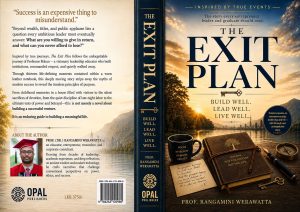
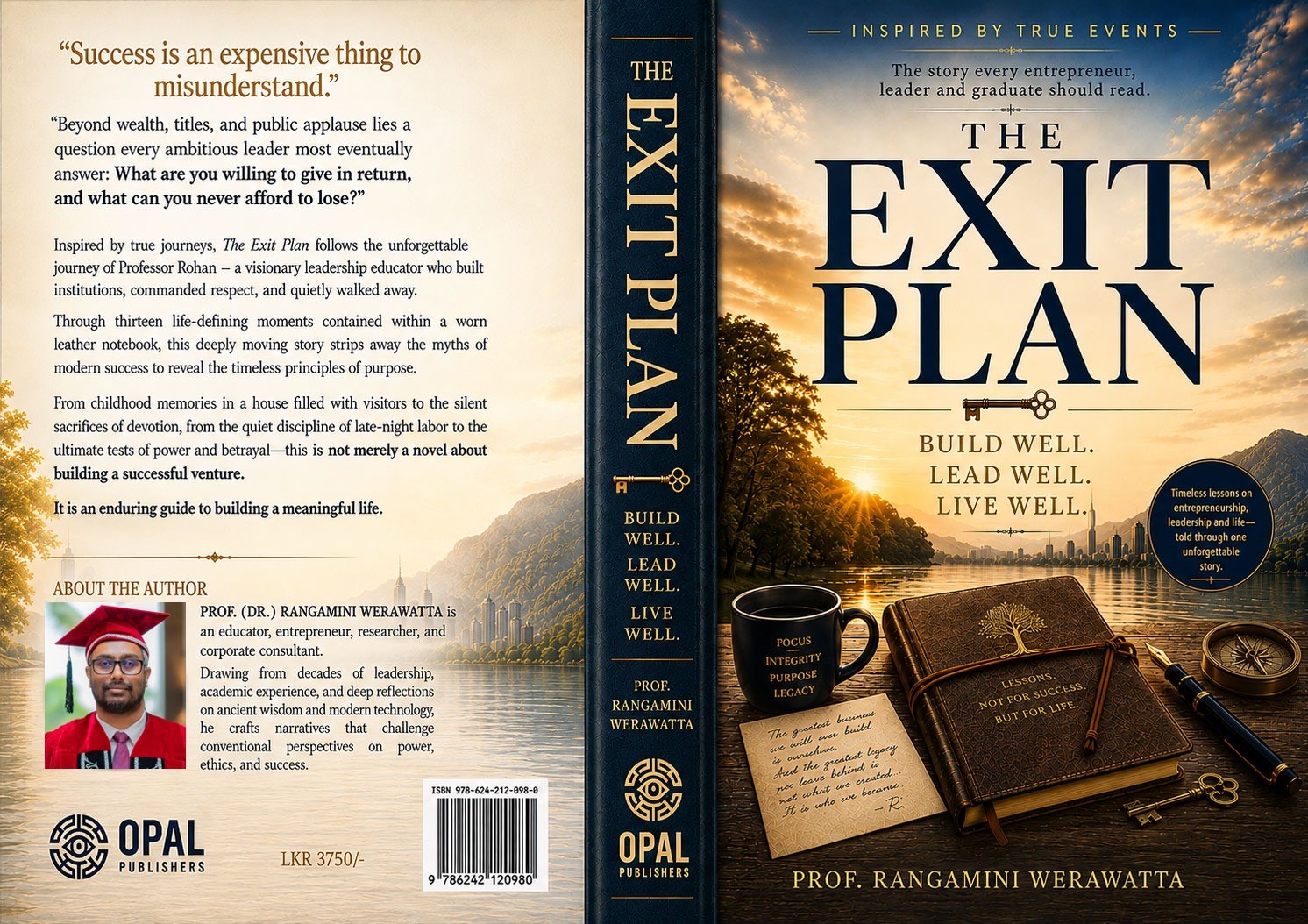
These reflections inspired me to write The Exit Plan.
More Than a Story About Business
Although The Exit Plan is inspired by true events, it is not a business textbook filled with theories and management jargon. Nor is it simply a novel.
It is a story about ambition, entrepreneurship, friendship, leadership, difficult decisions, resilience, and purpose.
At its heart is a question every entrepreneur will eventually face:
What happens when success costs more than you expected?
Every founder dreams about the day they launch a product, secure investment, or achieve rapid growth. Few think about the personal cost of that journey—the relationships tested, the values challenged, and the difficult choices that define who they become.
The real exit plan isn’t about selling a company.
It is about ensuring that when your journey is over, you leave behind more than profits—you leave behind people, principles, and a legacy worth remembering.
The Startup Ecosystem Needs More Than Innovation
Today’s startup ecosystem celebrates innovation, disruption, and rapid scaling. Those are important.
But sustainable businesses are not built on innovation alone.
They are built on:
• Trust
• Integrity
• Accountability
• Compassion
• Resilience
• Humility
These qualities rarely appear on a business canvas or investor pitch deck, yet they determine whether an organization survives beyond its founder.
Technology changes rapidly.
Human values do not.
A Lesson from the Buddha
One teaching of the Buddha has remained with me throughout my life: “Sabbā pahāya gamanīyaṃ.”
One day, we must leave everything behind.
Every entrepreneur spends years building companies, products, brands, wealth, and reputation.
Yet one day, all of these will be left behind.
This realization changes how we define success.
If everything is temporary, perhaps our greatest achievement is not the business we build but the people we inspire, the values we uphold, and the difference we make in the lives of others.
This timeless philosophy became one of the deepest inspirations behind The Exit Plan.
Why Young Leaders Should Read This Book
This book is written for those who aspire not only to build successful careers but also meaningful lives.
Whether you are:
• a university student,
• a software engineer,
• a startup founder,
• a product manager,
• a technology entrepreneur,
• or an emerging leader,
the lessons within these pages invite you to think beyond the next promotion, funding round, or product launch.
They encourage you to ask:
• What kind of leader am I becoming?
• What values will define my decisions?
• What legacy will I leave behind?
These questions matter just as much as any technical skill.
Build Well. Lead Well. Live Well.
Technology will continue to evolve.
Artificial intelligence will reshape industries.
New startups will emerge.
New opportunities will appear.
But the qualities that make exceptional leaders have remained unchanged for centuries.
Integrity.
Wisdom.
Compassion.
Purpose.
These are the foundations upon which enduring organizations—and fulfilling lives—are built.
If The Exit Plan encourages even one young entrepreneur to lead with greater integrity, one founder to value people over ego, or one graduate to redefine success beyond financial achievement, then it will have fulfilled its purpose.
Because in the end, success is not measured by what we build.
It is measured by who we become.
Build Well. Lead Well. Live Well.


