



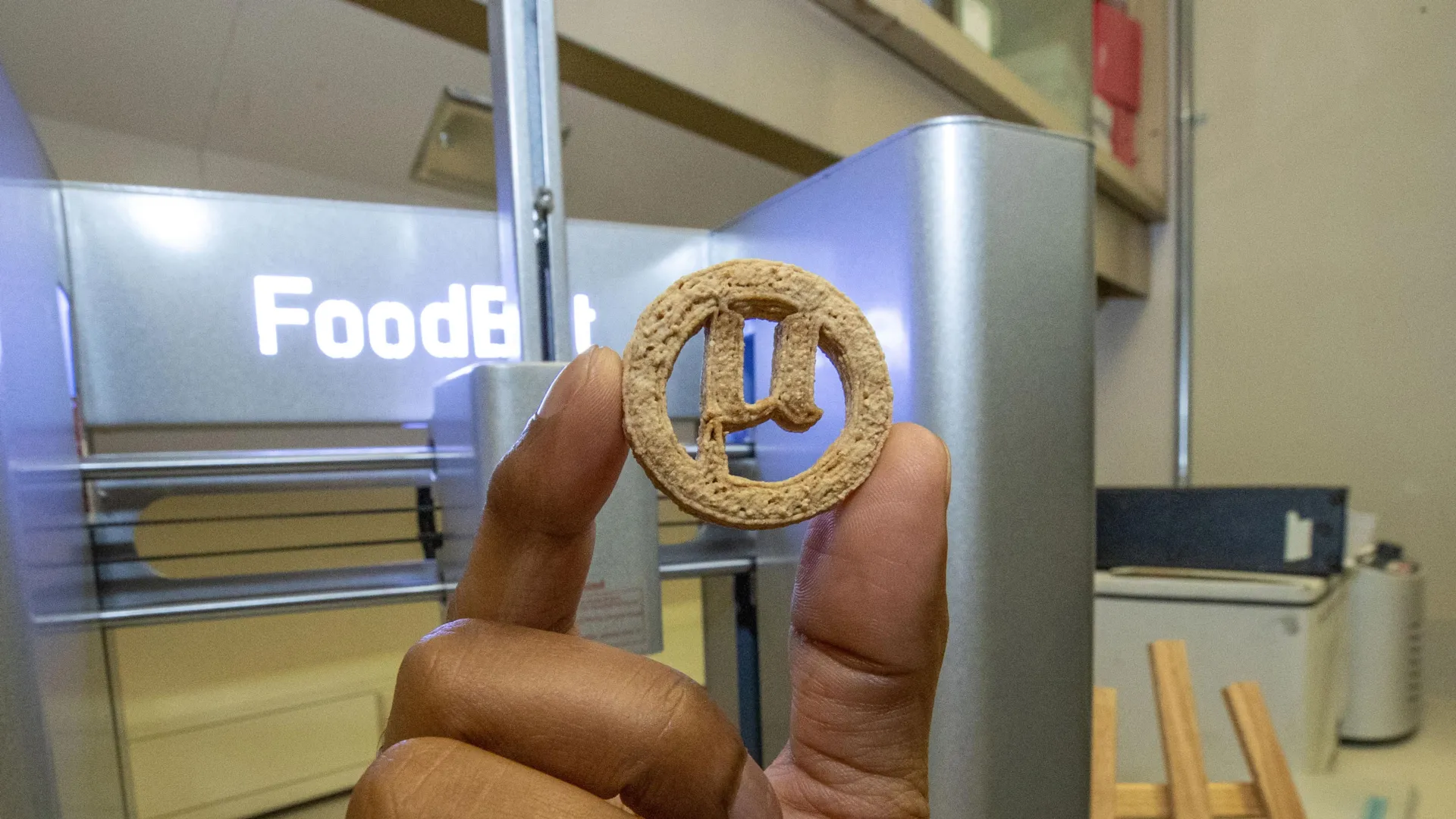
Scientists are engineering yeast to turn plastic waste into protein-rich cookies that could someday feed people on Earth, the Moon, or Mars.
Plastic bottles and cookies may seem to have nothing in common, but researchers are finding a way to connect the two. By engineering yeast, scientists have developed a system that can transform compounds from plastic waste and agricultural waste into edible proteins, vitamins, flavorings, and other food ingredients.
The approach could provide a new way to reuse difficult waste while also helping produce food in places where conventional supplies are limited. Potential applications range from disaster zones on Earth to human missions deep into space.
The researchers presented their results at the fall meeting of the American Chemical Society (ACS) during the “Undergraduate and Graduate Research in Biochemistry and Chemical Biology” symposium at McCormick Place.
Turning Plastic Waste Into Food
Plastic pollution and food insecurity are two major global challenges, and researchers at Southern Illinois University (SIU) Carbondale are exploring whether one problem could help address the other. Their goal is to use microorganisms to convert waste materials into food that people can safely eat.
The research grew out of a NASA-led project focused on producing food in the resource-limited conditions of deep space exploration, where astronauts cannot depend on regular shipments from Earth.
“We were trying to develop technologies for plastic upcycling to make more valuable products. We thought, why not focus on making food? Because plastic is carbon and food is carbon,” explains Associate Professor Lahiru Jayakody.
A major target is polyethylene terephthalate (PET), a widely used plastic found in products such as soda and water bottles. PET contains carbon-rich molecules that can potentially be broken apart and rebuilt into useful compounds, including components that can ultimately become proteins.
Scientists could perform some of those transformations using chemical reactions and laboratory solvents. The SIU Carbondale team instead turned to microbes, which can carry out complex biochemical processes naturally.
Jayakody adds, “Microbes are very clever. So, we are using their traits to solve the problems we created.”
Engineering Yeast as Tiny Food Factories
Using microorganisms to manufacture useful substances is already well established. Yeast, for example, can be genetically programmed to produce valuable molecules. Insulin, which was once obtained from animal pancreases, can now be made using engineered microbes.
Jayakody and graduate student Sandhya Jayasekara applied a similar idea to waste. They programmed several types of yeast, including baker’s yeast, to take molecules derived from plastic and agricultural leftovers and convert them into proteins, vitamins, and flavoring compounds.
Before the yeast can use those materials, however, the waste has to be broken into more manageable pieces.
The researchers process PET plastic, discarded corn stalks and leaves, and other biomass using a proprietary technique known as oxidative hydrothermal dissolution. Developed by SIU Carbondale Geology Professor Ken Anderson, the process combines water and oxygen under high temperature and pressure to break resistant materials into compounds microbes can access.
Those smaller molecules are then fed to the engineered yeast. The microorganisms transform them into new food components, including proteins, fats, and acids.
From Waste Materials to 3D Printed Cookies
Once the yeast-derived ingredients have been produced, researchers combine them with fiber, starch, and sweetener. The mixture is then pushed through a 3D printer to create protein-rich cookies called µBites (pronounced “microbites”).
The available data indicate that µBites are safe to eat, although the researchers are still waiting for institutional approval before conducting formal taste tests.
For now, participants have evaluated the cookies based on their aroma. Most said they would be willing to eat µBites in situations where food resources were scarce.
The researchers are also working to make the cookies more appealing to people who have other food choices.
Jayasekara engineered yeast strains capable of producing additional food ingredients. Baker’s yeast can now generate vanilla flavoring from plant biomass. Another yeast strain can use ethylene glycol derived from PET to produce beta carotene, which the human body can convert into vitamin A.
“We’re using microbes to develop the cookie into a more attractive, consumer-friendly product,” says Jayasekara.
Making More of the Cookie From Microbes
The team ultimately wants microbes to produce even more of the ingredients needed for µBites. That includes the starch, fiber, and sweetener that currently have to be added separately.
Jayakody hopes the cookies could be ready for public consumption within the next few years. Beyond everyday use on Earth, the technology could be especially valuable in environments where carrying or delivering large quantities of food is difficult.
Possible settings include submarines, disaster areas, and eventually human settlements on the moon or Mars.
The researchers also see the technology as one possible response to growing pressure on the global food supply.
“Global food demand is expected to rise 35-56% by the year 2050, and about 30% of the world population will be at risk of hunger in the future. The way to address that, I believe, is by using microbes,” he concludes.
The research was funded by the NASA Deep Space Food Challenge and a National Science Foundation Faculty Early Career Development Program (CAREER) grant.
(Science Daily)