










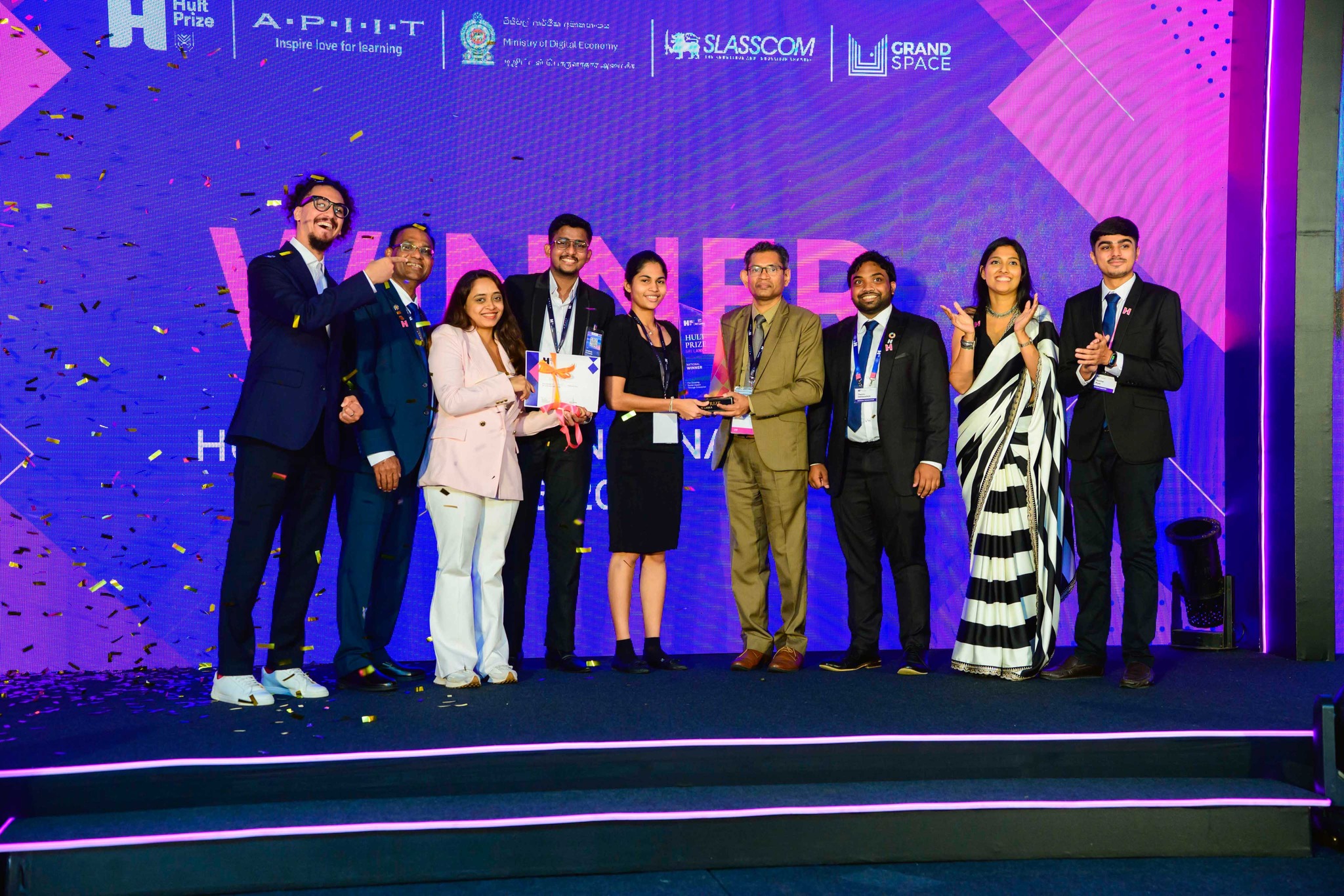
More than thirty student-led startups from universities across Sri Lanka gathered in Colombo on May 10 for what has become one of the most consequential student entrepreneurship events on the island’s annual calendar: the Hult Prize Sri Lanka Nationals 2025/2026 Grand Finale, held at the Commercial Credit Training Academy and hosted locally by APIIT Sri Lanka, with sponsorship from the Ministry of Digital Economy.
The event brought together over 30 outstanding student-led startups from across the island, providing a platform for young innovators to present impactful and sustainable business solutions addressing global challenges. Participants competed for the opportunity to advance to the global finals, where finalists stand a chance to secure $1 million in seed funding to transform their ideas into real-world ventures.
The stakes are real. Over a million aspiring social entrepreneurs have taken part in the Hult Prize competition since its founding in 2009. To reach the global finals, teams must clear four stages: campus-level qualifiers, national rounds, a Digital Incubator where up to 60 startups refine their ideas and develop go-to-market strategies, and a Global Accelerator at Ashridge House outside London, from which six teams are ultimately chosen to pitch at the Global Finals. Named by Time magazine as one of the top five ideas changing the world for the better and described as the Nobel Prize for students, the Hult Prize has grown from a single student’s idea into a global movement.

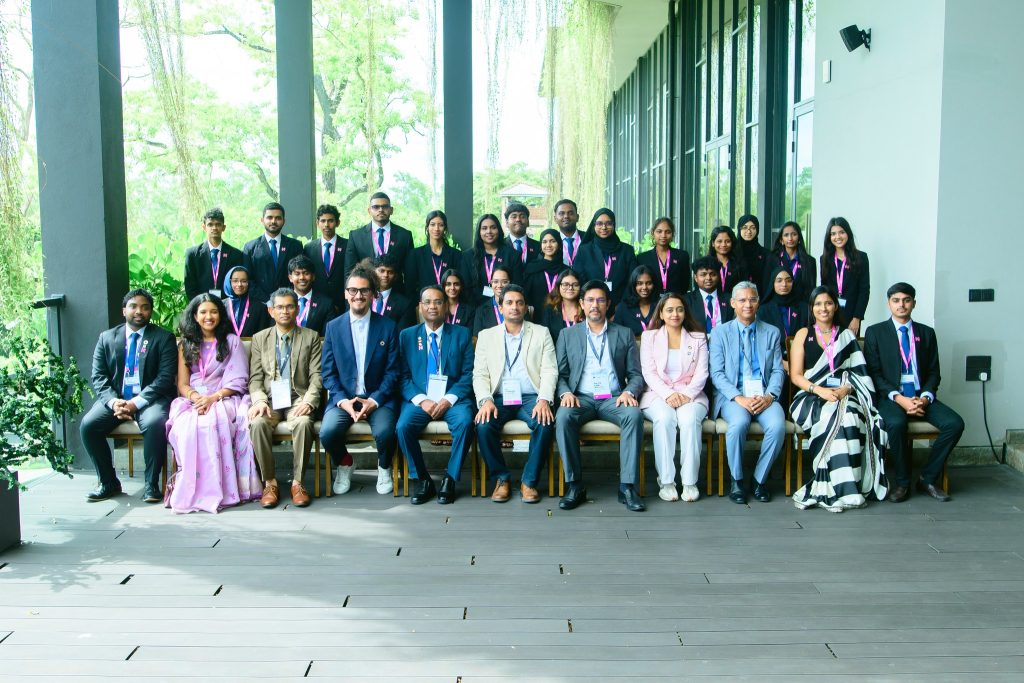
Addressing the event as Chief Guest, Deputy Minister of Digital Economy Eng. Eranga Weeraratne said the responsibility of shaping Sri Lanka’s future digital economy rests heavily on the next generation of entrepreneurs, stressing that innovation must be inclusive, practical, and socially responsible. He placed particular weight on building digital solutions that serve small and medium-scale enterprises, rural communities, and persons with special needs, a pointed reminder that the $15 billion digital economy target Sri Lanka has set for 2030 will require reach well beyond Colombo’s commercial district.
Weeraratne reaffirmed the government’s commitment to strengthening digital infrastructure and innovation ecosystems to create a more supportive environment for startups and emerging businesses, encouraging participants to transform ideas into scalable ventures capable of addressing pressing national challenges.
The government’s framing of the competition as part of a broader national agenda reflects a growing consensus that the next generation of Sri Lankan tech talent should be building and staying, rather than leaving. Dr. Hans Wijayasuriya, Chief Advisor to the President on Digital Economy and one of the key architects of the government’s DIGIECON 2030 strategy, has argued that Sri Lanka must move from a service-based economy to one that creates products and owns intellectual property, requiring a frictionless environment where innovators are not held back by outdated regulations. Competitions like the Hult Prize, with their structured pathway from campus idea to global accelerator, are precisely the kind of institutional scaffolding that makes that shift possible.
The event was also attended by Deputy Minister of Industry and Entrepreneurship Development Chathuranga Abeysinghe, alongside representatives from the Hult Prize Foundation including Senior Director Hamdi Ben El Elmi, Regional Manager Supriya Jangre, APIIT Chairman Bandula Egodage, Hult Prize National Director Thaviru Hettiarachchi, and heads of APIIT Business School. Ministry of Digital Economy Secretary Waruna Sri Dhanapala was also present.
The Hult Prize currently operates across more than 120 countries and has supported over 3,000 startups since its founding, making Sri Lanka’s national round part of a much larger global pipeline of youth-driven enterprise. Organisers said the national finals marked a significant milestone for Sri Lanka’s participation in one of the world’s largest student entrepreneurship platforms, providing local talent with global exposure while reinforcing the country’s ambitions to build a knowledge-driven and innovation-led economy.
The winning team from the Sri Lanka nationals now advances to the Digital Incubator phase, with a pathway to the Global Accelerator in London and ultimately the Global Finals in September 2026.


