








The Ministry of Science and Technology has had a notably active start to 2026, rolling out a series of initiatives that signal a more deliberate push to embed science, technology, and innovation into everyday public life, from village-level data collection to AI literacy within government offices.
The most recent development is the launch of the Citizen Science Cell, inaugurated on 17 March under the patronage of Minister Professor Krishantha Abeysena. The initiative, backed by the Centre for Sustainable Development Reform at the University of New South Wales, is designed to bring ordinary citizens into the scientific process. Using the existing VIDATHA Resource Centre network as its backbone, the Cell will mobilise public participation to collect and analyse data on biodiversity, water and air quality, and climate change patterns. In a country as ecologically diverse as Sri Lanka, the ability to gather ground-level scientific data at scale is not a small thing. The Cell will also feed into the government’s Clean Sri Lanka programme, contributing technical data on plastic reduction and disaster mitigation.
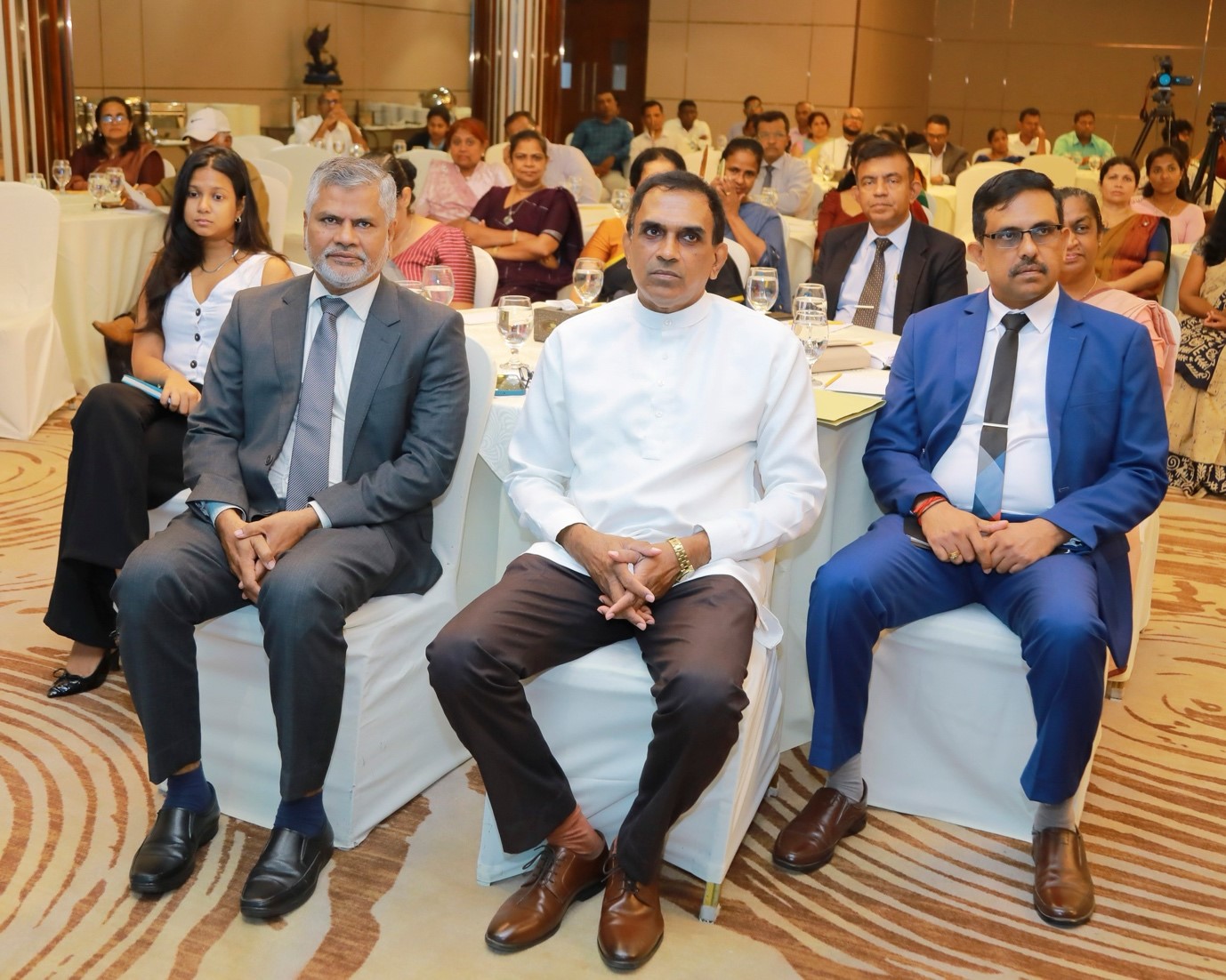
A few weeks earlier, in early March, the Ministry ran a full-day workshop on using artificial intelligence in office work, targeting its own staff. What started as a programme for around 80 participants drew more than 100, a small but telling sign of the appetite within the public sector to engage with AI tools practically. The workshop covered prompt engineering, document summarisation, translation, AI-assisted presentations, and the use of NotebookLM for research and knowledge management. It was a grounded, practical session rather than a high-concept exercise, which is precisely the kind of AI adoption that tends to stick.
Rounding out the Ministry’s recent activity was the opening of the Harvest Centre at the Faculty of Agriculture, University of Ruhuna. The second such Service and Support Centre established by the Ministry, it is focused squarely on agribusiness and food technology entrepreneurs across the Southern Province, specifically in Matara, Galle, and Hambantota. The Centre gives SMEs access to university laboratories, packaging guidance, technical training, and academic consultancy, giving small producers a credible pathway to meet national and international market standards.
Taken together, these three moves reflect a Ministry trying to operate at multiple levels simultaneously: community science, public sector digital capability, and grassroots entrepreneurship. Whether the momentum holds will depend on execution, but the direction is clear enough.