



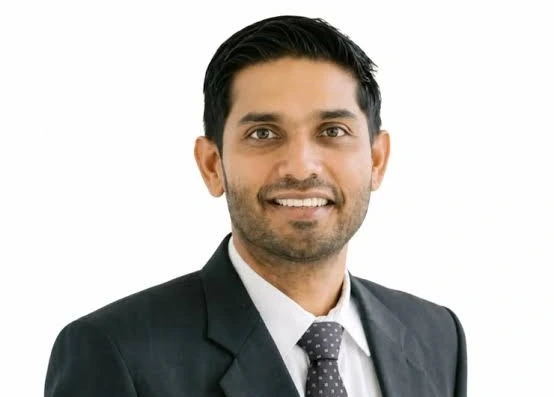
Professor Roshan Ragel spearheads national research and education infrastructure as the Consultant CEO of the Lanka Research and Education Network (LEARN), and current chairperson of the Asi@Connect Steering Committee.
He is also a contributor to the Presidential Task Force on Education and the National AI Strategy, and leads the Skills and Curriculum pillar for AI Sri Lanka.
A senior professor of Computer Engineering at the University of Peradeniya since 2007, his research and academic excellence have earned him numerous accolades, including Presidential awards for scientific publications, top rankings in computer science in Sri Lanka, and the National Educator Gold Award.
He was also the first academic from the Global South to receive the 2025 IEEE Computer Society Mary Kenneth Keller Computer Science & Engineering Undergraduate Teaching Award.
Prof. Ragel recently shared some of his thoughts and insights with Techie.Lk.
As the founder of the AI Forum for Academics (AIFA) and a member of the Presidential Committee to Formulate the AI Strategy for Sri Lanka, what essential principles should university assessment frameworks adopt to maintain academic integrity alongside LLM adoption?
Start from what students already do. In a study we ran in May 2025 with 80 computing students from three Sri Lankan institutions, 88% used AI chatbots even for basic programming tasks. Rules that ignore this will themselves be ignored, and they penalise the honest students.
First, be clear. Every assessment should say what AI use is allowed: none, some, or full use with disclosure. Students should not have to guess.
Second, assess the process as well as the product. Drafts, short vivas and in-class work show learning in a way a polished essay no longer can.
Third, do not rely on AI detectors. They are unreliable, and a false accusation can damage a student’s record.
Fourth, train the teachers. Through the Staff Development Centre at Peradeniya and through AIFA, we spend much of our time on this. AI can help on the teaching side as well. One of our student teams built a course tutor that answers from the course material first and calls an outside model only when it needs to, and another is building a feedback system that plugs into Moodle.
Fifth, keep authorship with people. As I argued in editorials for the Journal of the National Science Foundation of Sri Lanka and the Ceylon Journal of Science, AI is a tool that supports scholars. It cannot be an author, and the responsibility stays with the person.
At the national level, I was part of the team behind the UGC’s National Policy Framework for the Use of Artificial Intelligence in the State University System, approved in July this year. Earlier, I led the Skills and Curricula pillar of the AI Sri Lanka initiative with ICTA, and I now serve on the Prime Minister’s Office working group on AI for General Education.
You served on the Presidential Committee to Formulate the AI Strategy for Sri Lanka and the recent GovTech group. How ready is Sri Lanka for AI, and what should come next?
We have good foundations. Our universities produce capable graduates, and adoption is growing. In a study we presented at APANConf last year, Sri Lanka’s AI uptake grew by about 15%, behind regional leaders but steady. The national strategy work and the UGC’s AI policy framework for universities approved this July give us a shared direction.
The gaps are in skills, language and compute. Most people still use AI tools without training in how they work or where they fail. That is why we built AI for All at LEARN, which has now trained about 15,000 learners across universities, schools and TVET institutions. Language is the second gap. Most Sri Lankans work in Sinhala or Tamil, and AI tools are still much weaker in those languages than in English, so local-language AI should be a national priority. The third gap is shared compute that universities and start-ups can use without each buying their own.
What comes next is delivery: funding the programmes in the strategy, measuring their results, and making sure the benefits reach people outside Colombo.
As Consultant CEO of LEARN, how does Sri Lanka’s research and education network support universities and research today?
LEARN connects 68 universities, research institutes and education bodies. Most people know it for the network itself. Our member universities have dedicated upstream capacity of 20G to the Internet, 20G to the local exchange and 6G to SOX, which carries Google, TEIN and other research and education peers. Through TEIN and Asi@Connect, a researcher in Jaffna or Peradeniya can work with partners across Asia and beyond.
The services on top of the network matter just as much. Students and staff use eduroam to get online at any participating campus, here or abroad. LEARN runs the identity federation that lets them sign in to shared services with their home account, a security incident response team for the sector, hosted Moodle and video conferencing, and the ac.lk domain registry.
More recently, LEARN has taken on AI capacity building. Our AI for All programme, developed locally in Sinhala, Tamil and English and following the UNESCO AI competency frameworks, has trained around 15,000 undergraduates, school teachers and TVET students to completion, through a national network of about 100 trainers.
The PeraSwarm project explores active localisation, navigation, and simultaneous mapping in mixed-reality environments. What distributed communication strategies prevent network congestion as a robotic swarm scales up?
Pera-Swarm started as a way to do swarm research without buying a hundred robots. Our framework, published in IEEE Access in 2023 with Dilshani Karunarathna, Nuwan Jaliyagoda and Isuru Nawinne, runs a few real robots alongside any number of virtual ones in the same experiment.
To scale, robots should talk to their neighbours rather than to everyone. If every robot sends its state to every other robot, traffic grows with the square of the swarm size, and the network soon cannot keep up.
So each robot shares information with robots nearby, sends updates when something changes rather than on a fixed clock, and does the heavy processing on board, sending only summaries. Our SLAM work, presented at SCSE 2025, follows the same approach: it decentralises exploration and mapping, using simple heuristics on an occupancy grid and low-cost sensors.
The mixed-reality setup lets us test this before building hardware. We can keep adding virtual robots until the network fails and see why. Our latest toolchain, presented at ICIIS, lets students program real and virtual robots from one block-based environment and upload code over the air. A current final-year team is adding active localisation and navigation.
Given recent developments in quantum-safe and lattice-based encryption, what hardware-level design challenges arise when deploying post-quantum cryptographic primitives on embedded IoT devices?
My group has not published on post-quantum cryptography yet, so I will answer from the area closest to it: securing embedded processors.
During my PhD at UNSW and for several years after, I worked with Sri Parameswaran and colleagues on protecting embedded processors from side-channel attacks. One of our countermeasures injected random instructions to hide the processor’s power signature. That work shapes how I see this question. An algorithm can be quantum-safe on paper and still leak its key through power use, timing or electromagnetic emissions. Lattice-based schemes do a lot of polynomial arithmetic, and each of those operations has to be implemented so that it does not leak.
Then there are the limits of the device. Keys and ciphertexts in these schemes are much larger than the elliptic-curve keys used today, while a sensor node may have a few kilobytes of memory and a small battery. Hardware accelerators help with speed, but they cost chip area and power. These devices also stay in the field for many years, so they need a safe way to update their cryptography when the standards change.
On the theory side, two of our final-year projects, with Janaka Alawatugoda and Qinyi Li of Griffith University, worked on lattice-based encryption, including a scheme designed to stay secure even when part of the secret key leaks. The hardware side is where most of the work remains.
Your work covers multimodal physiological signal analysis, such as lightweight neural networks for EEG emotion recognition and deep learning for ECG arrhythmia detection. How do you overcome subject-dependent variance when training models for subject-independent deployment?
This is the hardest part of the work, and much of what we publish deals with it. We start with honest testing. Many studies split the data so that the same person appears in both training and testing. The accuracy looks high but tells you little about a new user. My PhD student Sivaraj Nimishan, working with Selvarajah Thuseethan and me, tests on people the model has never seen.
We also keep the models small. Our Tiny Variational Residual Network (TVRN) was built for subject-independent EEG emotion recognition on devices with little memory and power. In a paper in IEEE Access this year, we tested how lightweight models cope with noisy EEG, using wavelet-based artefact removal before classification.
EEG datasets are small, so we also study how far limited data can go. Our paper in Smart Health looked at how shallow and deep models behave as the training data shrinks, because that is the situation most labs are in.
For ECG, we use synthetic data and transfer learning. A model first learns to predict heart measurements, such as heart rate and the QT interval, and then learns to classify. A current final-year team is also building an arrhythmia classifier for microcontrollers with under 2 kB of memory, a project we are collaborating on with Titus Jayarathna of MARCS Institute for Brain, Behaviour & Development at the University of Western Sydney.
We have not removed the variation between people, but these steps reduce its effect.
In generating synthetic cardiac MRI images and counterfactual ECG waveforms using deep generative and diffusion models, how do you validate that synthetic data preserves clinical fidelity without compromising patient privacy?
We check three things separately: whether the synthetic data looks real, whether it is useful, and whether it leaks information about real patients.
For cardiac MRI, Madhura Edirisooriya, Dasuni Kawya and Ishan Kumarasinghe compared three generative models, working with Isuru Nawinne, Vajira Thambawita at SimulaMet in Norway, and Mary Maleckar. Image-quality measures covered fidelity. The more important test was usefulness: we trained a heart segmentation model on synthetic images and tested it on real scans. It came close to a model trained on real data, though not all the way. For privacy, we checked that no synthetic image was a near-copy of a training image, and we ran membership-inference attacks. Those attacks scored around 0.58 to 0.60, where 0.5 would mean no leakage at all. Synthetic data lowers the privacy risk, but it does not remove it.
For ECG, Tharaka Dilshan and Nethmini Karunarathne used a diffusion model to turn normal rhythms into atrial fibrillation and back. Each generated signal had to pass a classifier check and a plausibility check, and only 7,784 of 22,469 passed. Adding those to the real data kept accuracy statistically level with the original. Review by cardiologists is the step still to come.
With datasets like DenPAR (annotated intra-oral periapical radiographs), what are the major barriers to transitioning AI-assisted radiographic tools into clinical dental workflows?
We published DenPAR in Scientific Data last year, working with dental clinicians and colleagues at SimulaMet. This year, in Scientific Reports, we used 1,000 expert-annotated radiographs to automatically measure alveolar bone loss, and the experts’ agreement reached an intra-class correlation of 0.80. So the models work in the lab. Getting them into a clinic is harder.
The first barrier is data. Good annotation takes a dentist’s time, which is scarce. Most datasets also come from one clinic or one type of X-ray machine, and a model trained on them may not work as well elsewhere.
The second is workflow. A dentist has a few minutes per patient. If the tool means opening another programme or waiting for a result, it will not be used. It has to sit inside the software the clinic already uses and work as a second reader.
The third is trust and approval. Clinicians want evidence from their own setting, regulators want clinical validation rather than test-set accuracy, and someone has to decide who is responsible when the tool is wrong.
These are problems of people and process more than of deep learning, and they take longer to solve.
In applying explainable deep learning models to medical image segmentation and fracture detection, how do you calibrate the model’s self-reported confidence so clinicians can identify potential false positives?
If a model says it is 90% sure, it should be right about 90% of the time. Most deep learning models are overconfident, so we measure calibration directly instead of trusting the score.
One result surprised us: calibration starts with the data. In an ECG study on heart-attack detection this year, models trained only on cases with certain diagnoses were the best calibrated, with an expected calibration error of 0.018. Replacing some of those with uncertain labels raised both the calibration error and the false-positive rate. Fewer, cleaner labels worked better than more, noisier ones.
We are just as careful with explanations. In a breast ultrasound study, we compared nine explanation methods across four kinds of networks, and no single method did well across all of them. A heatmap shows where the model looked. It does not show that the model was right.
In our tibia fracture work, the reason for this care is practical. Sri Lanka does not have enough specialists, and X-ray image quality is not consistent. In that setting, a tool that can say “I am not sure, please look closely” is more useful than one that always gives an answer.
Where to set the threshold is a clinical decision, so we set it together with clinicians.
When researching fine-tuned LLMs for automated Verilog code generation and repository-scale debugging, how do you safeguard against logic bugs or hidden security flaws introduced by AI code synthesisers?
This is early work for us. Two final-year teams are working on it now, and neither has published results yet. Sahan Nimantha, Jaliya Kumarasiri and Vidura Yashan are fine-tuning LLMs to generate Verilog and its variations, supervised by Isuru Nawinne and Damayanthi Herath. Lahiru Menikdiwela, Eshan Jayasundara and Achsuthan T. are working on fixing issues in large code repositories, tested on the SWE-bench benchmark. They map file dependencies to locate bugs, generate patches, and verify them against the project’s unit tests.
The safeguards follow from how hardware engineers already work. Every line the model writes gets reviewed, as a senior engineer would review a new graduate’s code. The Verilog team filters its training data with industry syntax checkers and measures the output on VerilogEval, a standard benchmark, by how often the generated designs pass its tests.
Once a chip is made, you cannot patch it. So simulate against a good testbench, lint the code, synthesise it and inspect the result. Where it matters, use formal verification to prove that the design meets its specification.
Security needs a separate review. Generated code can leave a debug path open or behave differently under rare conditions, and normal tests will not catch that.
Ultimately, the human engineer signs off on the design and is responsible for it.
Your empirical studies on prompt injection attacks suggest model vulnerability. What architectural defences (input sanitisation, guardrail models, system-level isolations) offer robust protection for corporate LLM deployments?
In early 2024, three final-year students, Haritha Gunarathna, Denuwan Weerarathne, and Nimuthu Wijerathne, reviewed prompt-injection research with Asitha Bandaranayake, Damayanthi Herath, and me. They grouped the known attacks into a taxonomy and found gaps. Some attacks, such as injections that carry over from one model to another, had no good defence at the time. Much of the field then lived in preprints and blog posts, and it has moved quickly since, so my view draws on that review and on later work.
No single defence is enough. The underlying problem is that an LLM reads instructions and data in the same stream, so a web page or email it processes can contain text that looks like a command. Input filtering helps, but published studies keep showing that filters alone can be bypassed, especially by long, carefully built prompts.
So we should layer defences, as with any security system. Keep trusted instructions separate from untrusted content. Give the model only the access it needs: if it only has to read a database, it should not be able to write to it. Require a person to confirm anything that sends, pays or deletes. Use a guardrail model to check inputs and outputs, knowing that it can also fail. Run tools in sandboxes and log what happens.
Finally, test the system yourself before an attacker does. Red-teaming should be a routine part of running an LLM service.
Your research spans deep hardware micro-architecture up to high-level machine learning frameworks. How can academic curricula better prepare computer engineering students to bridge hardware/software co-design?
Let them build complete systems, from the bottom to the top, more than once.
At Peradeniya, we do this through a sequence of team projects, published openly on our department’s project portal. In the Second Year Project (2YP), students build a complete software system, such as a mobile app or a management information system. In the Third Year Project (3YP), they build a hardware system: a cyber-physical system that brings together embedded hardware, the software that runs on it, a cloud-hosted back end and front end, and the networking that connects them. Recent examples include AgriScout, MedFlow and a drone swarm. By the time students reach the final-year capstone research project, they have already built a working system twice, once in software and once across hardware and software.
The capstone is where this comes together. One team, Kanishka Gunawardana, Sanka Peeris and Kavishka Rambukwella, with Isuru Nawinne, built SNAP-V, a RISC-V chip design with its own accelerator for small spiking neural networks. The hardware matched the software model to within about 2.6%, at roughly 1 picojoule per synaptic operation. To get there, they had to understand the processor, the memory, the on-chip network and the model. Another team built a full RV32IMF processor pipeline. In our research, with Sri Parameswaran, we have also used hardware/software co-design to speed up chaining, a key step in genome analysis.
Many courses still teach the layers separately: digital design in one semester, machine learning in another. Students pass each one and still cannot see how a choice at one-layer costs something at another. Projects that cross the layers, year after year, are how we deal with that.
A few other things help. Use open hardware such as RISC-V, so that licence fees are not a barrier. Teach measurement: how fast, how much power, how much memory, and how you know. And mix the teams, so that the student who likes circuits works with the student who likes models.
What challenges and opportunities do research labs in developing tech ecosystems face when conducting competitive, globally recognised research in AI and high-performance computing?
The challenges are well known: limited compute, small budgets, slow procurement, and good graduates leaving for PhDs and jobs abroad.
We also have advantages. We have problems the rest of the world has not solved, and data only we can collect. Our tibia fracture work, for example, starts from a shortage of specialists here. Research that starts from a local problem and is done well gets noticed internationally.
Collaboration matters a great deal. Some of our medical AI work is done with SimulaMet in Norway, and graduates who go abroad often keep working with us. My former student Hasindu Gamaarachchi, now in Sydney, co-authored a Genome Research paper with us last year on ex-zd, a method that halves the size of nanopore sequencing data without affecting the analysis that follows.
Infrastructure is the base for all of this. Through LEARN, Sri Lanka’s research and education network, our universities have dedicated upstream capacity: 20G to the Internet, 20G to the local exchange, and 6G to SOX, which carries Google, TEIN and other research peers. That is what lets a lab in Peradeniya work with a lab in Oslo every day. Regionally, I sit on the APAN Board and Chair the Asi@Connect steering committee, which links research networks across Asia. Shared national compute for AI is the next thing we need.
Looking at the convergence of AI, quantum computing, and bioinformatics, where do you see the most high-impact research opportunities for the next decade of computer engineering?
For Sri Lanka, I would put AI and biology together first. Wearables, low-cost sensors and genome sequencing now produce health data at a scale we could not handle before.
We have worked at both ends: deciding in real time which DNA molecules to sequence (DeepSelectNet), and shrinking the data once it is read (ex-zd). On the clinical side, early detection from an ECG or a dental X-ray can save lives at low cost.
The second area is efficient AI hardware. Today’s models use a lot of energy. Making AI run well on small, cheap devices near the user, as in our SNAP-V neuromorphic work, matters for countries that cannot depend on very large data centres.
Quantum computing is important, but I would be careful about the hype. Our students compared hybrid quantum convolutional networks with classical ones this year and saw gains in parameter efficiency, but only on small image datasets. The urgent work for now is post-quantum security: protecting today’s systems before quantum computers can break them. Building quantum hardware is a long-term effort, so we should train people who understand it and stay connected to the groups that build it.