



Close Menu

    Subscribe to Updates

    Get the latest creative news from FooBar about art, design and business.

    What's Hot

    AI redefines performance metrics for AR optical systems

    August 24, 2026

    From orphaned calves to smart technology: HIP advances ‘Save Ali Pancha’

    August 24, 2026

    ‘Starry Night’ telescope photo captures some of the oldest stars in the universe — Space photo of the week

    August 24, 2026
    Facebook X (Twitter) LinkedIn
    Trending
    • AI redefines performance metrics for AR optical systems
    • From orphaned calves to smart technology: HIP advances ‘Save Ali Pancha’
    • ‘Starry Night’ telescope photo captures some of the oldest stars in the universe — Space photo of the week
    • What Is Chuwi, The Laptop Brand Challenging Apple?
    • Government-led IDAT Program advances data-driven decision-making across Sri Lanka’s fisheries and plantation sectors
    • Addressing the Future of Work: CIPM Sets Focus on “The Human Edge in the Age of AI” for NHRC 2026
    • Building the case for software outsourcing in 2026: What’s changed, and the reasons that are still relevant
    • Chip squeeze hits Chinese smartphones in India as Apple, Samsung gain an edge
    Facebook X (Twitter) LinkedIn
    Techie.LKTechie.LK
    Demo
    • Home
    • Local
      1. AI & Machine Learning
      2. Consumer Tech
      3. Cybersecurity
      4. Enterprise Tech
      5. Fintech & Digital Payments
      6. GovTech & e-Governance
      7. Legal & Regulatory Tech
      8. Science & Innovation
      9. Startups & Venture
      10. Telecom & Connectivity
      Featured

      From orphaned calves to smart technology: HIP advances ‘Save Ali Pancha’

      By Techie.lkAugust 24, 20260
      Recent

      From orphaned calves to smart technology: HIP advances ‘Save Ali Pancha’

      August 24, 2026

      Government-led IDAT Program advances data-driven decision-making across Sri Lanka’s fisheries and plantation sectors

      August 24, 2026

      Addressing the Future of Work: CIPM Sets Focus on “The Human Edge in the Age of AI” for NHRC 2026

      August 24, 2026
    • International
      • AI & Machine Learning
      • Consumer Tech
      • Cybersecurity
      • Enterprise Tech
      • Fintech & Digital Payments
      • GovTech & e-Governance
      • Legal & Regulatory Tech
      • Science & Innovation
      • Startups & Venture
      • Telecom & Connectivity
    • Interviews
    • Profiles
    • Analysis
    • Contributors
    • Podcasts
    • More
      • About Us
      • Contact Us
    Techie.LKTechie.LK
    Home»International»‘Starry Night’ telescope photo captures some of the oldest stars in the universe — Space photo of the week
    International

    ‘Starry Night’ telescope photo captures some of the oldest stars in the universe — Space photo of the week

    Techie.lkBy Techie.lkAugust 24, 2026No Comments1 Views
    Facebook Twitter LinkedIn WhatsApp Reddit Tumblr Email
    Share
    Facebook Twitter LinkedIn
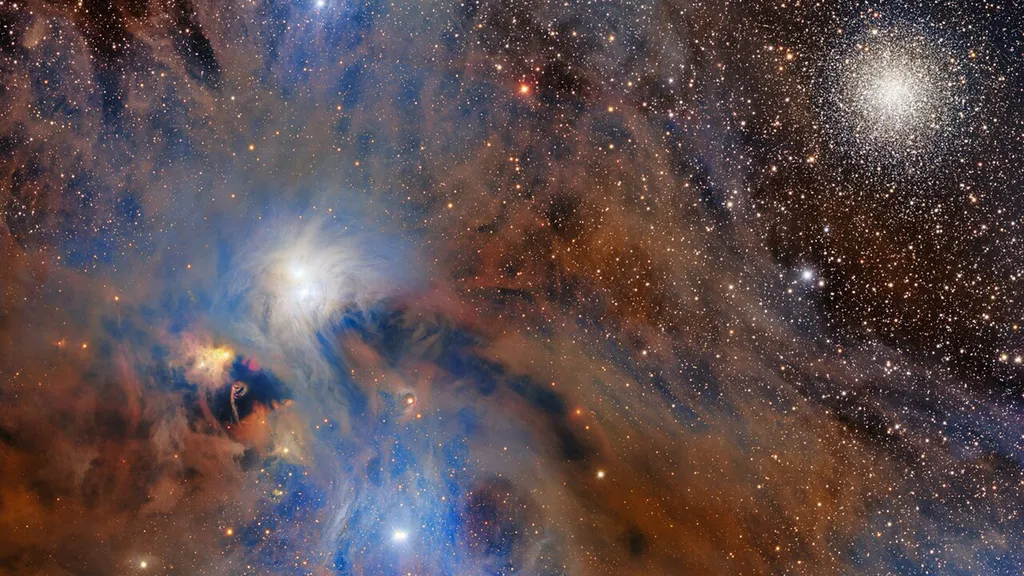
    Featured Image: The Corona Australis Molecular Cloud and the Chandelier Cluster.

    In a scene reminiscent of Vincent van Gogh’s “The Starry Night,” scientists have captured swirling nebulae, dark dust lanes and sparkling star clusters in remarkable detail.

    This spectacular new image from the Dark Energy Camera (DECam) on the National Science Foundation’s Victor M. Blanco 4-meter Telescope in Chile shows the Corona Australis Molecular Cloud, one of the closest active star-forming regions to our solar system. It’s a place where temperatures fall to around minus 440 degrees Fahrenheit (minus 260 degrees Celsius), allowing dense pockets of gas and dust to collapse and form new stars.

    The portrait also combines star-forming regions with an ancient globular cluster far beyond them, all within a single field of view. The 570-megapixel DECam’s 74 detectors and 3-foot-wide (1 meter) lens make it one of the world’s most powerful wide-field astronomical instruments.

    On the left side of the image is the glowing nebula NGC 6729, nestled within the molecular cloud. The blue is a reflection nebula, which is caused by dust reflecting starlight, while the orange shows an emission nebula, which forms when ultraviolet radiation from a young star ionizes gas with its youthful radiation. At the heart of NGC 6729 is R Coronae Australis, a binary star system whose stars complete an orbit of each other every 43 to 47 years.

    Glittering like a firework on the upper right is NGC 6723, a globular cluster approximately 29,000 light-years from Earth. Also called the Chandelier Cluster, it contains hundreds of thousands of stars that formed billions of years ago, with some almost as old as the universe itself. However, astronomers suspect that there are several populations of similarly aged stars within the cluster, indicating a complex evolutionary history. NGC 6729 and NGC 6723 are favorite targets for astronomers and astrophotographers because of their relatively close proximity to Earth. However, because they’re found below the constellation Sagittarius, they’re best seen from the Southern Hemisphere. If you’ve got the right vantage point, a good backyard telescope will help you see this chaotic cradle of star formation.

    (Image credit: Dark Energy Survey/DOE/FNAL/DECam/CTIO/NOIRLab/NSF/AURA)
    (Live Science)
    Featured Top Posts
    Share. Facebook Twitter LinkedIn
    Techie.lk
    • Website

    Related Posts

    AI redefines performance metrics for AR optical systems

    August 24, 2026

    From orphaned calves to smart technology: HIP advances ‘Save Ali Pancha’

    August 24, 2026

    What Is Chuwi, The Laptop Brand Challenging Apple?

    August 24, 2026
    Leave A Reply Cancel Reply

    Demo
    Top Posts

    The Exit Plan: The Leadership Lessons No Startup Can Afford to Ignore

    August 18, 2026180

    The Death of the Traditional Software Engineer: Bridging the Talent Gap in the Post-AI Era

    August 10, 2026104

    Sanali Kaushalya: Women in Tech Sri Lanka, Country Director

    August 5, 202641

    Vipula Liyanaarachchi: Zone24x7 Sri Lanka, General Manager

    August 13, 202632
    Don't Miss
    International

    AI redefines performance metrics for AR optical systems

    By Techie.lkAugust 24, 20261

    Artificial intelligence (AI) doesn’t replace the traditional metrics of augmented-reality (AR) optical performance, but it…

    From orphaned calves to smart technology: HIP advances ‘Save Ali Pancha’

    August 24, 2026

    ‘Starry Night’ telescope photo captures some of the oldest stars in the universe — Space photo of the week

    August 24, 2026

    What Is Chuwi, The Laptop Brand Challenging Apple?

    August 24, 2026
    Stay In Touch
    • Facebook
    • Twitter
    • LinkedIn

    Subscribe to Updates

    Get the latest creative news from SmartMag about art & design.

    Demo
    About Us
    About Us

    Your source for the lifestyle news. This demo is crafted specifically to exhibit the use of the theme as a lifestyle site. Visit our main page for more demos.

    We're accepting new partnerships right now.

    Email Us: techielkeditor@gmail.com
    Contact: +94 77 328 0773

    Facebook X (Twitter) LinkedIn
    Our Picks

    AI redefines performance metrics for AR optical systems

    August 24, 2026

    From orphaned calves to smart technology: HIP advances ‘Save Ali Pancha’

    August 24, 2026

    ‘Starry Night’ telescope photo captures some of the oldest stars in the universe — Space photo of the week

    August 24, 2026
    Most Popular

    The Exit Plan: The Leadership Lessons No Startup Can Afford to Ignore

    August 18, 2026180

    The Death of the Traditional Software Engineer: Bridging the Talent Gap in the Post-AI Era

    August 10, 2026104

    Sanali Kaushalya: Women in Tech Sri Lanka, Country Director

    August 5, 202641
    © 2026 Techie. Designed by NIKO.
    • Terms & Conditions
    • Privacy Policy

    Type above and press Enter to search. Press Esc to cancel.