










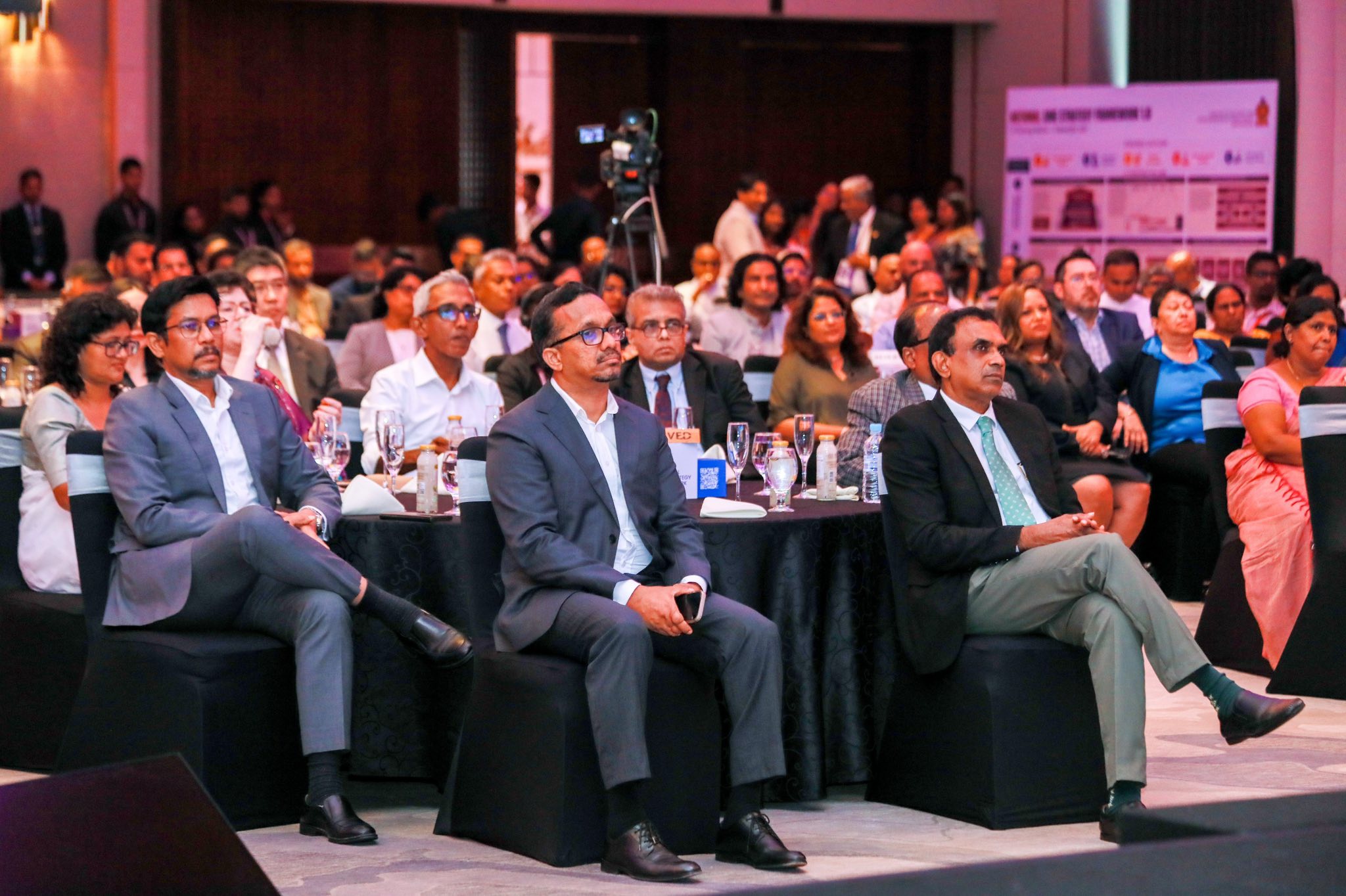
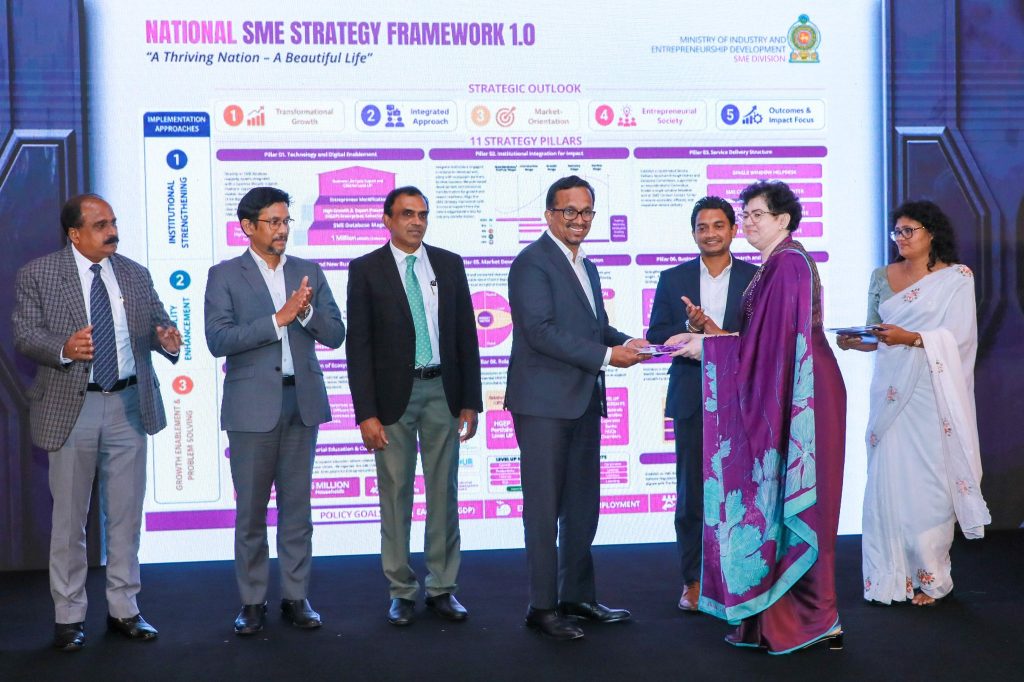
Sri Lanka’s government formally launched the SME Nexus National Strategic Framework 2026 on May 13 at The Grand Maitland Hotel in Colombo, signalling the most structured policy intervention the country has mounted for its small and medium enterprise sector in years and placing it at the centre of a long-term bid to triple the national economy.
The initiative primarily seeks to remove structural barriers faced by the SME sector, which represents more than 75% of registered businesses in Sri Lanka, contributes 52% to the country’s Gross Domestic Product, and employs 45% of the national workforce. The numbers make the sector’s importance difficult to argue with. In Sri Lanka, SMEs account for more than 20% of exports and provide essential livelihoods to many across the country, but their businesses are more vulnerable to demand downturns, disrupted fund flows, shrinking financing, high inflation, and shortage of raw materials.
The timing is pointed. For Sri Lanka’s small-scale exporters and local manufacturers, 2026 was expected to mark a period of recovery and relative stability following years of economic strain. Instead, the sector now finds itself navigating a renewed wave of uncertainty, with little time to recover from compounding disruptions. Against that backdrop, Minister of Industry and Entrepreneurship Development Sunil Handunnetti framed the new framework as a structural reset rather than a routine policy document. He argued that Sri Lanka has long failed to maximise SME potential because government institutions operated in isolation with fragmented and overlapping policies, and that the new framework seeks to bring all stakeholders under one coordinated national platform.
The strategy is built around 11 pillars focused on institutional integration, policy stability, and technological empowerment. Among its more concrete features are plans for a single-window service platform, an “SME Connect” call centre, the appointment of dedicated Relationship Officers to provide direct guidance beyond conventional channels, and a SIBA (Strategic Intelligence for Business Advancement) unit to enable data-driven decision-making. A “Growth Fund” is proposed to expand access to finance, alongside free advisory services and an integrated digital business tools ecosystem.
The finance gap is one the framework has to take seriously. According to the World Bank, 68% of Sri Lanka’s MSMEs struggle with access to finance, while 52% are hindered by regulatory burdens. Deputy Minister of Industry and Entrepreneurship Development Chathuranga Abeysinghe has noted that only 20% of credit from the financial sector currently reaches SMEs, against a 2030 export target of $36 billion, which would require doubling current levels. The proposed Growth Fund and easier entry points for financing are direct responses to this structural credit gap, one the government has not historically been able to close through goodwill alone.


International capital is already moving in adjacent directions. In January 2026, the International Finance Corporation announced a $166 million investment program to expand financial access for Sri Lankan SMEs, with a specific focus on empowering women-owned businesses and the agri-business sector, aiming to drive inclusive growth and unlock job opportunities for underserved groups.
On the digital side, the government’s Digital SME Empowerment Roadmap aims to digitally enable 60% of MSMEs by 2027, supported by ICTA and SLASSCOM, with e-commerce adoption projected to rise from 25% to 75%. The SME Nexus framework’s integrated data system and digital tools agenda sits within that broader trajectory.
Export integration has been identified as both the opportunity and the persistent bottleneck. Research published by the Asian Development Bank found that lack of access to finance, lack of technology, lack of information, inability to meet quality standards, and inability to produce at required quantities are the main obstacles preventing Sri Lankan SMEs from linking with global value chains. The SME Nexus framework’s pillar on integrating local products into global value chains addresses this directly, though the gap between strategy and execution has historically been where Sri Lanka’s SME policy has stalled.
The framework is designed to guide entrepreneurs from sustaining day-to-day livelihoods to transforming into high-growth, export-oriented enterprises. To build the pipeline from school through to enterprise, the framework includes an entrepreneurial culture agenda at the school and university level, a recognition that sustained SME growth requires attitudinal change as much as structural reform.
Deputy Minister Abeysinghe described the framework as a “dream come true” after nearly 15 months of consultations with industry stakeholders and policymakers.
The event was held under the patronage of Minister Handunnetti and was attended by Minister of Science and Technology Prof. Krishantha Abeysena, Deputy Minister of Digital Economy Eng. Eranga Weeraratne, Deputy Minister of Industry and Entrepreneurship Development Chathuranga Abeysinghe, Deputy Minister of Defence Aruna Jayasekara, and the Australian Deputy High Commissioner to Sri Lanka Ruth Baird, among other distinguished guests.


