









Sri Lanka is taking a meaningful step toward modernising its disaster management infrastructure, with India providing both the technology and the institutional backing to make it happen.
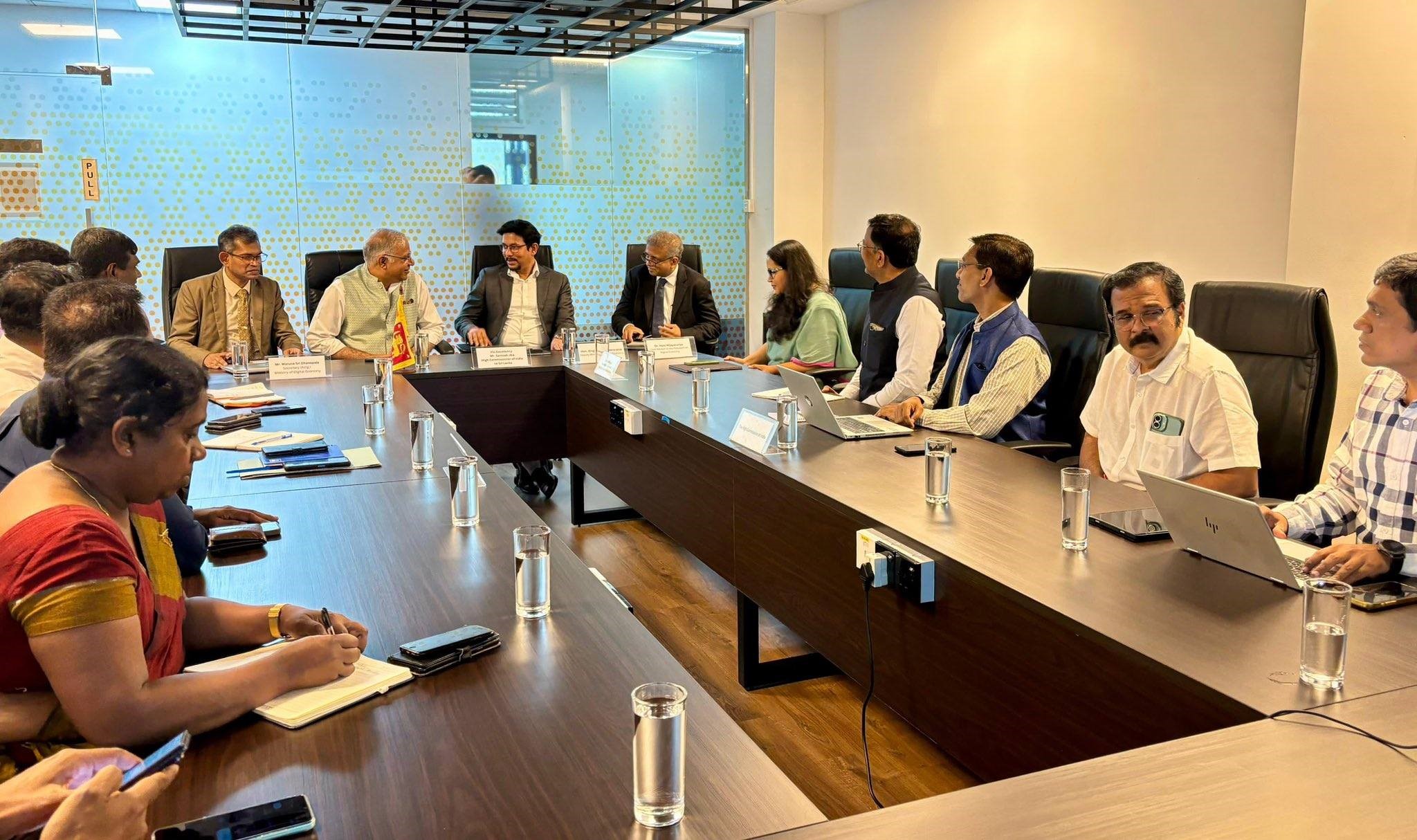
The Ministry of Digital Economy hosted a high-level meeting on 24 March 2026, chaired by Deputy Minister Eranga Weeraratne and India’s High Commissioner to Sri Lanka, Santosh Jha. The session brought together Dr. Hans Wijayasuriya, Chief Advisor to the President on Digital Economy, Ministry Secretary Waruna Sri Dhanapala, and senior officials from the Disaster Management Centre, signalling the seriousness with which both governments are approaching the initiative.
At the centre of the discussions was a demonstration of the Disaster Impact Assessment Platform, developed by India’s Bhaskaracharya Institute for Space Applications and Geoinformatics, commonly known as BISAG. The platform integrates advanced geospatial technologies to map, assess, and respond to disaster impacts in real time. For Sri Lanka, a country that regularly contends with flooding, landslides, and cyclonic weather, the ability to process spatial data quickly and accurately during a crisis has direct, life-saving implications. The platform is being taken forward with the support of the Disaster Management Centre, the Ministry of Digital Economy, and GovTech Sri Lanka.
Alongside the platform demonstration, a proof of concept was presented for a mobile broadcast Early Warning System developed by C-DOT, India’s national telecommunications research and development centre. The system is designed to push emergency alerts directly to mobile devices, reaching populations in affected areas without requiring them to actively seek out information. This kind of cell-broadcast technology has been deployed effectively in other countries during earthquakes and tsunamis, and its potential application in Sri Lanka adds a critical layer to the country’s early warning architecture.
The meeting reflects the growing depth of Sri Lanka-India digital cooperation, which has accelerated over the past year across areas including connectivity, fintech regulation, and now disaster resilience. What sets this particular engagement apart is its practical focus. Rather than remaining at the level of memoranda and bilateral statements, both sides are moving into demonstration and proof-of-concept territory, the stage where intent starts becoming infrastructure.
With climate-related disasters increasing in frequency and severity across South Asia, the timing of this collaboration is far from incidental.