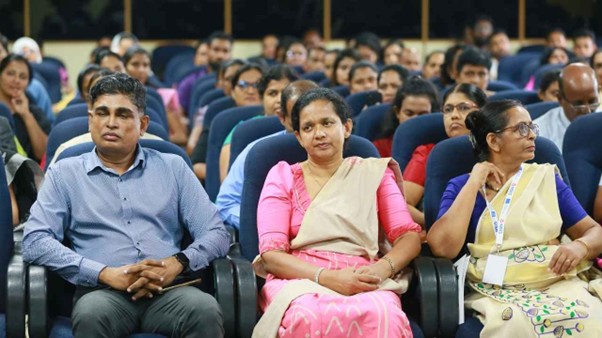








The National Awareness Day (NAD) of the Erasmus+ NSIS Project was successfully held on 19 March 2026 at the University of Colombo, bringing together academics, policymakers, researchers, librarians, and industry representatives to explore strategies for strengthening innovation and entrepreneurship in Sri Lanka.
The event was organised by the University of Kelaniya in collaboration with the other Sri Lankan NSIS project partners—the University of Peradeniya and the University of Ruhuna—under the EU co-funded Erasmus+ Capacity Building in Higher Education project “Developing Information, Research, and Digital Skills for Business, Innovation and Entrepreneurship (NSIS)”. The programme highlighted the growing importance of digital transformation and research capacity in higher education. Senior Professor K.L. Wasantha Kumara, Vice Chairman of the University Grants Commission, attended as Chief Guest, while Professor I.M. Karunathilake, Vice Chancellor of the University of Colombo, was the Guest of Honour.
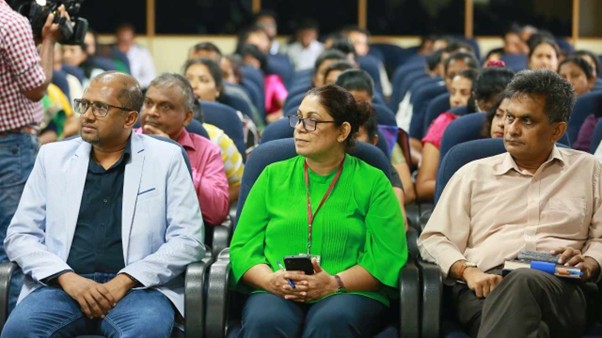

The event attracted over 160 participants, including academics, policymakers, librarians, and professionals representing 20 organisations such as state and private universities, government institutions, and professional bodies, including the Central Bank of Sri Lanka, Telecommunication Regulatory Commission of Sri Lanka, Consumer Affairs Authority, and the National Chamber of Commerce.
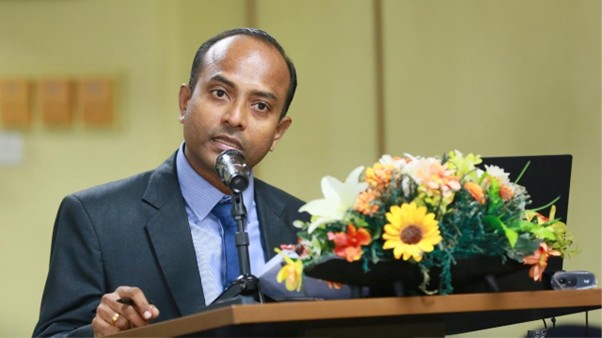
Delivering the welcome address, Dr. Tharanga Ranasinghe, Project Coordinator from the University of Kelaniya, emphasised the need to strengthen digital, research, and information competencies to support a knowledge-driven economy. He noted that the three-year NSIS project brings together partner institutions from seven countries—Ireland, Romania, Germany, Greece, India, Sri Lanka, and Nepal—to enhance the role of library and information professionals in research and innovation ecosystems.
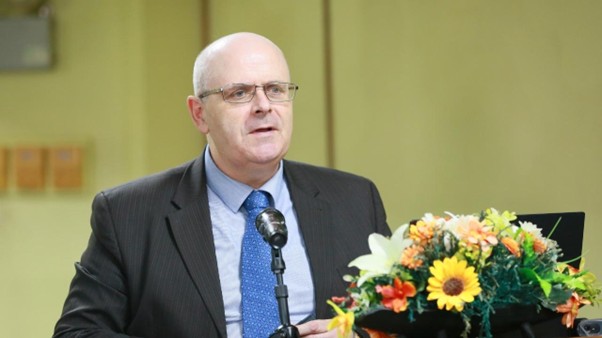
An overview of the project was presented by Mr. Padraig Kirby, Project Manager at the Technological University of the Shannon: Midlands, Ireland. He outlined the project’s background, objectives, and key outcomes, including the development of a 10-module training curriculum, an online learning platform, and a Training of Trainers (ToT) model to ensure long-term sustainability and regional impact. He also highlighted the project’s focus on strengthening the role of library and information professionals in supporting research, innovation, and entrepreneurship within universities.
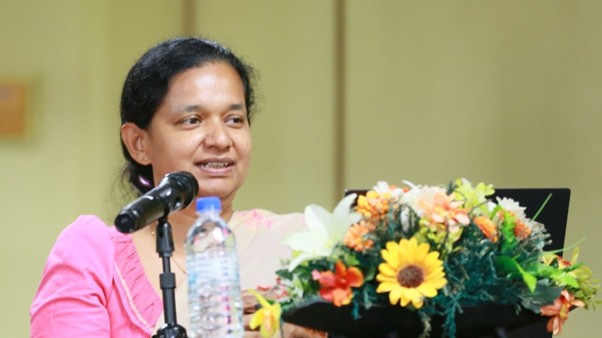
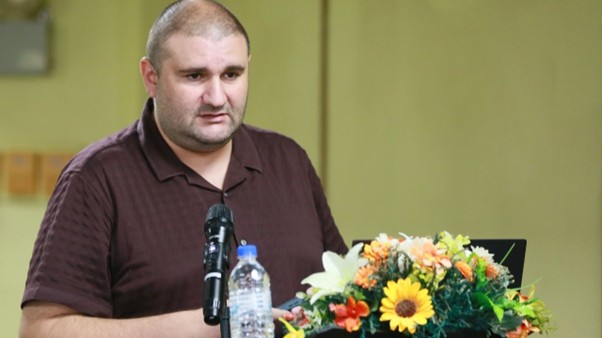
The programme featured keynote addresses by Professor Kaushalya Yatigammana of the University of Kelaniya and Dr. Mihai Bârsan of MB Think Tank, Romania. Professor Yatigammana highlighted the importance of digital and research skills in supporting Sri Lanka’s transition towards a knowledge economy, noting existing gaps in digital literacy, research capability, and industry–academia collaboration. Dr. Bârsan focused on the management of intellectual property in knowledge transfer, emphasising the evolving third mission of universities in contributing to economic and societal development through innovation and industry engagement.
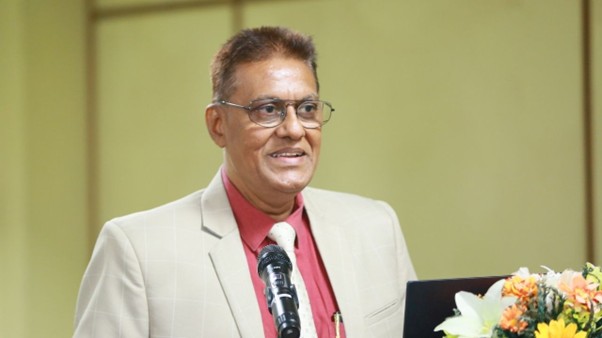
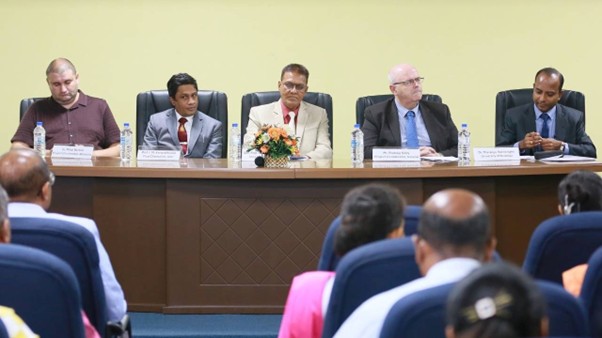
A highlight of the event was the panel discussion on Empowering Innovation and Entrepreneurship through AI, Digital Transformation and Research Skills, moderated by Mr. T. Ramanan. The panel, comprising Mr. Padraig Kirby, Professor Kaushalya Yatigammana, Dr. Mihai Bârsan, and Dr. Chathura Rajapakse, critically examined the role of artificial intelligence, digital technologies, and intellectual property in strengthening research and innovation ecosystems. The discussion also addressed practical strategies for implementing the NSIS curriculum and ensuring sustainability beyond the project lifecycle.
The NSIS initiative aims to strengthen research ecosystems, promote technology transfer, and foster closer collaboration between academia, industry, and policymakers. The project is expected to contribute significantly to innovation-led, knowledge-based economic growth in Sri Lanka and the wider South Asian region.